


4 Pcs Professional Leather Craft Shoemaker Cobbler Stitching Sewing Awl
Original price was: ₹4,999.00.₹3,999.00Current price is: ₹3,999.00. GST
Anatomy of a Cobbler’s Sewing Awl
A typical sewing awl consists of several key parts:
- Handle: Usually made of wood or a durable plastic, the handle is designed for a firm grip, allowing the user to apply steady pressure.
- Shank: This is the metal part that extends from the handle and holds the needle.
- Needle: The needles are sharp, heavy-duty, and come in various sizes and shapes, including straight and curved. They have an eye at the pointed end for the thread. Some awls come with interchangeable needles to suit different tasks.
- Bobbin or Thread Spool: Many sewing awls have a small bobbin or spool housed within the handle to store the thread, allowing for a continuous and tidy feed.
- Thread: The thread used with a sewing awl is typically a waxed, heavy-duty polyester or linen cord that is resistant to wear and tear.
The Art of the Lock Stitch
The genius of the sewing awl lies in its ability to create a lock stitch with a single tool. The process involves the following steps:
- Preparation: The thread is passed from the bobbin through a channel in the awl and then threaded through the eye of the needle. A length of thread is pulled out.
- First Stitch: The needle is pushed through the material, creating a hole. The user then pulls back slightly, forming a loop on the other side.
- Creating the Lock: The loose end of the thread (the tag end) is then passed through this loop.
- Subsequent Stitches: The needle is then pushed through the material at the next desired stitch point. As the awl is pulled back, it brings the working thread with it, forming another loop. The tag end is again passed through this new loop.
- Tightening: After each stitch, the user pulls on both the working thread from the awl and the tag end to tighten the stitch, securely locking the two threads together within the material. This process is repeated for the entire length of the seam.
Applications and Versatility
The cobbler’s sewing awl is a versatile tool with a wide range of applications, including:
- Shoe Repair: Mending torn seams, re-stitching soles, and repairing straps on boots and shoes.
- Leather Goods: Crafting and repairing belts, wallets, bags, and harnesses.
- Outdoor Gear: Fixing tents, backpacks, and other camping equipment.
- Sails and Canvas: Mending sails, boat covers, and awnings.
- Upholstery: Repairing seams on heavy fabric furniture.
SINGLE QTY 5% OFF
DOUBLE QTY 7.5% OFF
TEN OR MORE THAN 10% OFF
1 in stock
Description
4Pcs Professional Leather Craft Shoemaker Cobbler Stitching Sewing Thread Hook Awl Needles Tool Cone Need Be Ground and Polished
The Heart of the Cobbler’s Craft: The Hooked Sewing Awl
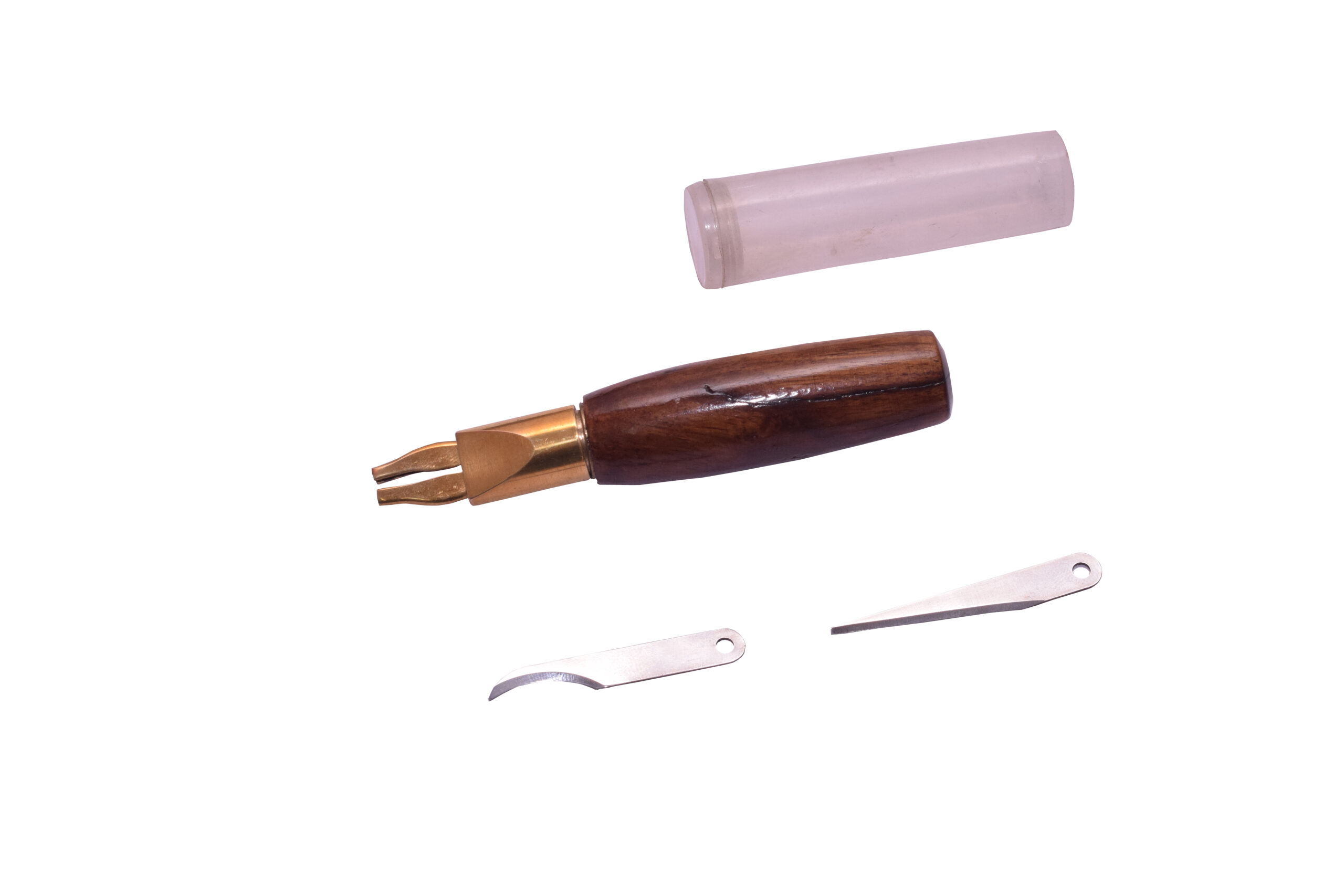
Pictured here is a set of classic shoemaker’s sewing awls, essential tools that represent the pinnacle of traditional leather craftsmanship. With their warm, polished wood handles and gleaming brass chucks, these awls are more than just implements; they are an extension of the artisan’s hand, designed for precision, durability, and control.
This specific type of awl is a hooked sewing awl, distinguished by its fine, curved needle that terminates in a tiny hook. This design is crucial for the intricate and robust stitching required in high-quality shoemaking and repair.
Key Features and Design
- Ergonomic Wooden Handle: The bulbous, lathe-turned wooden handle is designed to fit comfortably and securely in the palm. This ergonomic shape allows the cobbler or leatherworker to apply significant, steady pressure to punch through dense materials like sole leather without strain.
- Adjustable Brass Chuck: The brass ferrule at the base of the handle acts as a chuck. The small set screw on the side allows the user to firmly secure the needle, as well as interchange it with different sizes or styles of needles, making it a versatile and long-lasting tool.
- Curved Hooked Needle: The business end of the awl is its most critical feature. The gentle curve of the needle allows the artisan to navigate the difficult angles involved in shoe construction, such as stitching a welt to an upper. The hook is expertly designed to catch the waxed thread from the opposite side of the leather and pull a loop back through the hole, forming the basis of a strong and resilient lockstitch.
Function in Shoemaking
Unlike a simple piercing awl that only creates a hole, this hooked sewing awl is an active part of the stitching process, functioning much like the hook of a sewing machine. The process typically involves:
- A hole is first made with a piercing awl.
- The hooked awl is then pushed through this hole from one side.
- The thread is caught by the hook on the other side.
- The awl is pulled back, drawing a loop of thread through the leather.
- A second thread is passed through this loop, and the stitch is pulled tight, creating a secure lockstitch that is renowned for its strength.
This tool is indispensable for hand-welting shoes (like in a Goodyear welt construction), stitching soles, and performing complex repairs where strength and precision are paramount. It is the key to creating footwear that is not only beautiful but built to last for generations.
Additional information
| Weight | 0.400 kg |
|---|
Only logged in customers who have purchased this product may leave a review.
Related products
-
- Sale!
- Cobbler Tools & Leather Tools
Leather Craft Shape Punch Heart Design
- Price range: ₹120.00 through ₹930.00 GST
- Select options This product has multiple variants. The options may be chosen on the product page
-
- Sale!
- Cobbler Tools & Leather Tools
Leather Strop Tool
- Original price was: ₹1,099.00.₹999.00Current price is: ₹999.00. GST
- Add to cart
-
- Sale!
- Cobbler Tools & Leather Tools
Alloy Steel Leather Hole Punches Imperial Sizes(in inches)
- Price range: ₹110.00 through ₹3,780.00 GST
- Select options This product has multiple variants. The options may be chosen on the product page



Reviews
There are no reviews yet.